
Buyers
UK House Price Growth by Region in 2026: Where Values Are Rising and Where They Are Not
⚡ QUICK ANSWER
The UK house price index shows 2.2% average growth in March 2026, but that headline hides a deeply divided market. Northern Ireland leads at +9.5% annual growth. The North West and Yorkshire follow at +3.3% and +3.0%. London fell -1.7%, with the South East down -0.5% and the South West essentially flat. The gap between the best and worst performing region is 11.4 percentage points — the widest spread in over a decade. Where you buy matters far more than when you buy.
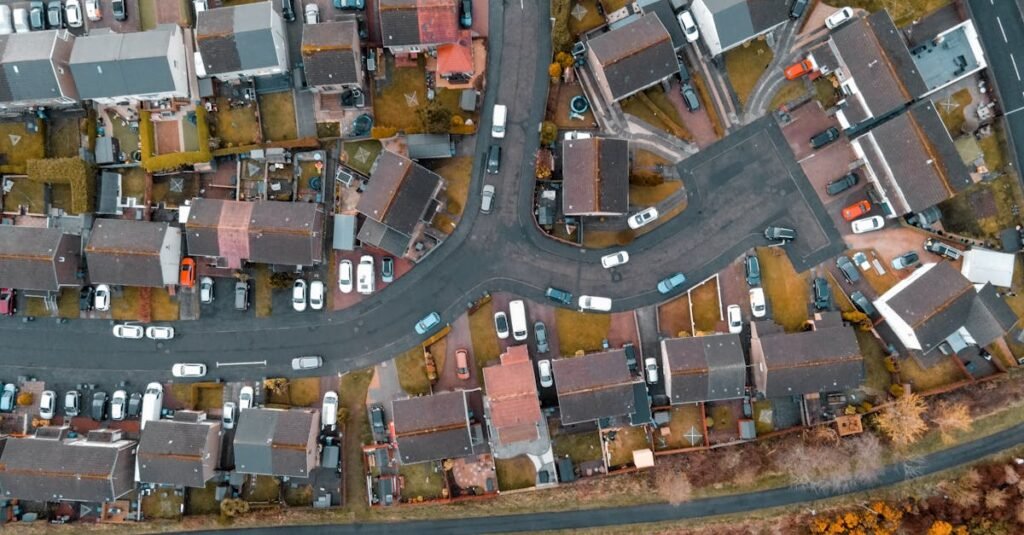
The single headline figure — 2.2% UK annual growth — tells a misleading story. It is the arithmetic average of two entirely different markets running side by side. One is growing at twice the national rate and pulling in first-time buyers and investors. The other is stalling or shrinking, with sellers unable to shift stock at the prices they expected.
The Two-Speed UK Housing Market — March 2026
+9.5%
Northern Ireland annual house price growth — six times the UK average
Nationwide, March 2026
-1.7%
London annual house price decline — six consecutive months of falls
UK HPI / Land Registry, 2026
What does the full regional breakdown look like right now?
This reflects the most recent UK House Price Index data to March 2026, compiled from Nationwide, Land Registry, and Zoopla.
| Region | Annual change | Average price |
|---|---|---|
| Northern Ireland | +9.5% | £196,000–£225,000 |
| North West | +3.3% | £238,000–£240,000 |
| Yorkshire & Humber | +3.0% | £232,000–£240,000 |
| Scotland | +3.0% | £188,000–£191,000 |
| Wales | +2.0% to +2.7% | £210,000–£215,000 |
| West Midlands | +0.8% | £245,000 |
| East Midlands | +0.5% | £260,000 |
| East | +0.3% | £330,000 |
| South West | -0.1% | £310,000 |
| Outer South East | -0.7% | £350,000+ |
| East Anglia | -0.4% | — |
| London | -1.7% | £530,000–£554,000 |
Why are northern regions outperforming so strongly?
Northern Ireland leads the table with prices up 9.5% in the year to March 2026. The average property sits around £196,000 to £225,000. Growth reflects limited new supply, strong domestic buyer demand, and lower absolute prices that reduce mortgage stress. A 5.5% mortgage on a £200,000 property costs £1,137 per month. The same rate on a £530,000 London property costs £3,008. Lower payments mean lower stress and stronger demand.
The North West (Greater Manchester, Lancashire, Cheshire) follows at +3.3% with prices near £238,000 to £240,000. Corporate investment and remote workers relocating from the South East are driving demand. Manchester, Leeds, and Liverpool have undergone significant apartment-led regeneration, creating modern supply that appeals to younger buyers and investors.
Yorkshire and Humber is growing at 3.0%, with prices averaging £232,000 to £240,000. First-time buyer demand is strong because the median price-to-earnings ratio sits between 4.6 and 6.5 — compared to 9.5+ in London. Pockets like Calderdale (+3.6%), Wakefield (+3.1%), and Bradford (+2.6%) are outperforming the regional average.
Three-bed semi in the North West:
January 2025 price: £235,000
January 2026 price: £242,205 (up 3.1%)
Capital gain: +£7,205
Three-bed semi in London:
January 2025 price: £550,000
January 2026 price: £541,650 (down 1.7%)
Capital loss: -£8,350
Same property type. Different geography. £15,555 gap in outcome.
What is happening in the middle ground — Midlands, Wales, and Scotland?
Scotland recorded 3.0% annual growth in Q1 2026, with average prices around £188,000 to £191,000. Growth is concentrated in Edinburgh and Glasgow where affordability attracts upgrading buyers. The Scottish market is large and diverse, though — Edinburgh tenements behave very differently from rural cottages.
Wales grew 2.0% to 2.7%, with averages around £210,000 to £215,000. South Wales valleys remain more affordable than equivalent properties in southern England while offering similar lending conditions, which pulls in relocating buyers from the South East.
The Midlands posted modest gains: West Midlands +0.8% (£245,000), East Midlands +0.5% (£260,000). These are commuter-belt regions with reasonable affordability but without the momentum further north. That said, local pockets like Melton and North East Derbyshire have outperformed, with prices up over 9%.
Why is London falling — and is the South East following it down?
London has recorded six consecutive months of annual price declines. The average property sits around £530,000 to £554,000. Flats have fared worse: average flat prices fell from £450,000 to £431,000 (down 4.2%). Inner London saw declines of -4.6% in December compared with a year earlier — the worst performance since the financial crisis.
The causes are structural. An affordability ratio of 9.5x salary makes London unattainable for most domestic buyers. Regulatory headwinds (the Renters’ Rights Act from October 2025) have cooled investor appetite. International capital has retreated. The city is no longer treated as an automatic store of value the way it was from 2010 to 2020.
The South East showed -0.5% annual decline (Outer South East -0.7%), with prices averaging £350,000+. The South West recorded -0.1% near-flat performance at £310,000. Both regions historically associated with wealth and price stability. Not in 2025–26.
⚠️ THE HEADLINE HIDES THE REAL PICTURE
The 2.2% UK average growth in March 2026 is the arithmetic result of +9.5% in Northern Ireland and +3.3% in the North West, offsetting -1.7% in London and -0.7% in the Outer South East. Do not treat the national average as representative of your area. Check your region and postcode specifically.
What does this mean if you are buying, selling, or investing?
Buyers: In declining markets (London, South East) you have more negotiating room on price and survey conditions. In fast-growing markets (North, Northern Ireland) competition is fierce, offers need to be strong, and falling through is costly. Getting a survey early is critical in hot markets; in cold markets you have more time.
Sellers: In the North, you likely have buyer interest — price realistically and you will sell. In London and the South East, expect lower interest and be prepared to negotiate. Pricing 5–10% above market in a declining region is a recipe for sitting unsold for six months.
Investors: Northern regions offer stronger capital growth but typically lower rental yields in absolute terms. A £200,000 property renting at £800/month is 4.8% gross yield. A £500,000 property renting at £1,500/month is 3.6% gross yield. Growth trajectories differ: North West forecast at 2.5%+ annually; London 1–2%.
✅ CHECK YOUR POSTCODE, NOT THE HEADLINE
Use the ONS postcode checker at ons.gov.uk or the Land Registry House Price Index at landregistry.data.gov.uk/app/ukhpi. Enter your postcode to see local comparable sales and whether you are in a growing pocket or a stagnating one. Postcode-level data is far more precise than regional averages.
Frequently asked questions
Will London bounce back to 2010–2020 growth rates?
Unlikely soon. Affordability gaps are structural, not cyclical. Recovery depends on sustained interest-rate falls (Bank of England rate expected to reach 4% by end 2026), overseas investment returning, and real earnings outpacing prices. Medium-term (2–3 years): cautious optimism. The era of 6%+ annual London growth is probably over.
Should I rush to buy in the North before prices rise further?
Past outperformance does not guarantee future gains. Zoopla forecasts above-average growth (2.5%+) in northern England, Scotland, and Northern Ireland in 2026, but forecasts are not certainty. Buy where you want to live, where the property is sound, and where the numbers work on a 5–10 year horizon. Timing the market is hard; buying the right property in the right area is less so.
Why is Northern Ireland outperforming by so much?
Lower starting prices (average £196,000–£225,000 vs £554,000 in London), limited new build supply, strong domestic demand, lower mortgage stress from lower absolute prices, and recovery from years of relative underperformance. The affordability advantage is real and, for now, sustainable.
Does the survey matter more in a falling market?
Yes. When regional growth is flat or negative, your return depends more on property condition, micro-location, and quality of the specific building. Capital growth cannot offset expensive repairs. A Level 2 or Level 3 survey is even more important in a declining market because every pound you overpay or miss in defects comes straight out of your equity.
Check the property, not just the postcode
Scan any property for visible issues in seconds with homeSurvey. Free to download.


Know exactly what you're buying
Walk any property with the free homeSurvey app and get an AI condition report for £24.99 — before you spend hundreds on a traditional survey.