
Buyers
The Regions Where House Prices Are Actually Falling in 2026
⚡ QUICK ANSWER
A falling housing market is one where prices drop year-on-year, driven by stretched affordability and reduced buyer demand. London prices fell 1.7% in the year to January 2026 (UK HPI, GOV.UK). The North West is the strongest market, with prices up 3.3% year-on-year (Zoopla, March 2026). The South East is broadly flat. If you are buying in a falling or flat market, you have more negotiating power. If you are buying in the North, you are competing.
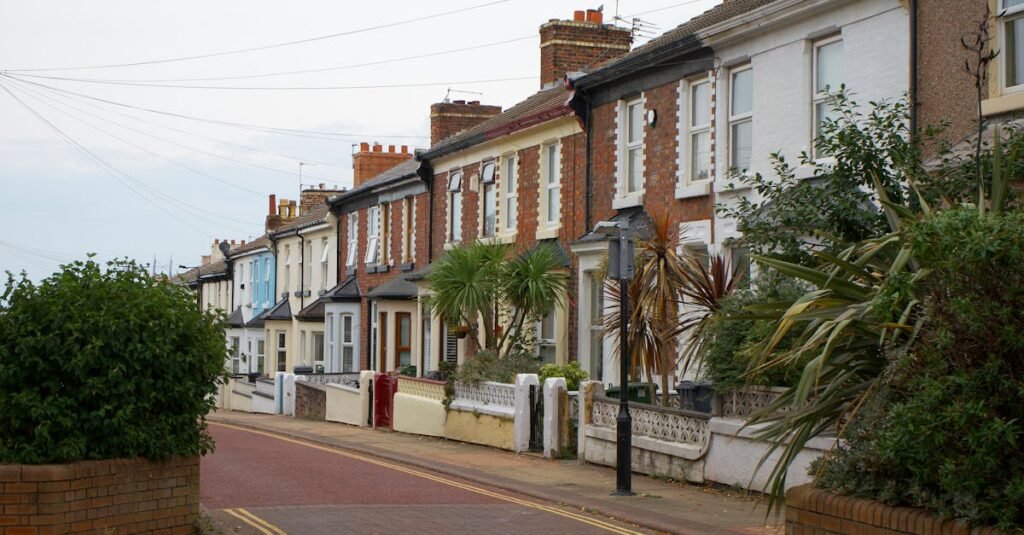
The story of 2026’s property market is not a single national trend. It is a tale of two countries. In London and much of the South, prices are flat or falling. In the North West, Northern Ireland and Scotland, buyers are being outbid.
This matters for three reasons. First, it changes your negotiating position. Second, it signals where demand is strongest. Third, it shows what happens when a region prices itself beyond what local incomes can support.
The Regional Split — April 2026
-1.7%
London year-on-year price change — the only major region in outright decline
UK HPI, January 2026
+3.3%
North West year-on-year growth — the strongest market in Great Britain
Zoopla, March 2026
Where are house prices falling and rising in 2026?
This table draws on the UK House Price Index (January 2026, GOV.UK), Zoopla House Price Index (March 2026), and Nationwide (Q1 2026). Where sources differ slightly, the most recent or most widely cited figure is used.
| Region | Annual change | Direction | Source |
|---|---|---|---|
| London | -1.7% | Falling | UK HPI, Jan 2026 |
| Outer South East | -0.7% | Falling | Nationwide, Q1 2026 |
| East Anglia | -0.4% | Falling | Nationwide, Q1 2026 |
| South East (overall) | ~0% | Flat | Zoopla, Mar 2026 |
| South West | <+1% | Broadly flat | Nationwide, Q1 2026 |
| East Midlands | <+1% | Broadly flat | Nationwide, Q1 2026 |
| North East | +2.5% | Rising | Zoopla, Mar 2026 |
| Scotland | +2.8% | Rising | Zoopla, Mar 2026 |
| Wales | +2.7% | Rising | Nationwide, Q1 2026 |
| Yorkshire & Humber | +3.0% | Rising | UK HPI, Jan 2026 |
| North West | +3.3% | Rising | Zoopla/Nationwide, 2026 |
| Northern Ireland | +7.6% | Rising strongly | Zoopla, Mar 2026 |
Why are prices falling in the South?
London and the South East did not fall because of weakness. They fell because they are too expensive. The average London property costs £554,000 (UK HPI, January 2026). The ONS housing affordability data for 2025 puts London’s price-to-earnings ratio at 10.6x. That means the average London home costs 10.6 times the median full-time salary. For context, an area is generally considered affordable if the ratio is at or below 5x.
The South East is one of the least affordable places in England outside London. Half of its local authorities have a price-to-earnings ratio above 10x (ONS, 2025). Surveyors and agents report that buyers in the region are becoming increasingly price-sensitive. When demand softens, prices stall or fall.
💡 AFFORDABILITY BY REGION (ONS, 2025)
London: 10.6x median earnings (£554,000 avg price)
England average: 7.6x (the lowest since 2015)
North East: 5.0x (most affordable region)
Most affordable local authorities: Hyndburn and Kingston upon Hull (4.1x)
Least affordable: Kensington and Chelsea (25.2x)
Since 2021, median earnings across England and Wales have risen 25%, while house prices have risen just 5% (ONS, 2025).
How did the stamp duty change make things worse?
From 1 April 2025, the first-time buyer stamp duty threshold dropped from £425,000 to £300,000 (GOV.UK). The maximum purchase price for first-time buyer relief also fell from £625,000 to £500,000. In London and the South East, where average prices sit well above £300,000, thousands of buyers now pay stamp duty who would have been exempt before.
A first-time buyer purchasing a £325,000 flat in London now pays £1,250 in stamp duty (5% on the £25,000 above £300,000). Before April 2025, they paid zero.
On a £425,000 property, the bill went from £0 to £6,250 overnight.
Multiply that by tens of thousands of first-time buyers across the South East and it is no surprise that demand has softened. Lower demand means lower prices, or at best, stagnation.
Where is the money moving instead?
The North West’s 3.3% growth was the strongest in Great Britain in the year to March 2026 (Zoopla). Yorkshire and the Humber saw 3.0% growth in the year to January 2026 (UK HPI). The reason? Affordability. A £250,000 budget gets you a three-bed semi in Manchester or Liverpool. In London, it barely covers a studio flat.
| City | Average price | Source |
|---|---|---|
| Manchester | £254,000 | ONS, Jan 2026 |
| Liverpool | £182,000 | ONS, Jan 2026 |
| Leeds | £246,000 | ONS, Jan 2026 |
| Birmingham | £233,000 | ONS, Dec 2025 |
| London | £554,000 | UK HPI, Jan 2026 |
The shift is real. Remote work, cost of living pressures, and affordability mean buyers are moving north and west. The ONS reports that London continues to have high levels of net outward internal migration. Rising prices in more affordable regions are the symptom, not the cause.
⚠️ RISING PRICES MEAN RISING COMPETITION
If you are buying in the North West or Midlands, you are competing. Prices are rising because supply is tight and demand is high. You need to move quickly, bid confidently, and be ready to proceed. Having a condition assessment and evidence of your financial position ready before you make an offer gives you an edge over other buyers.
What are the forecasters saying for the rest of 2026?
The major property forecasters broadly agree on the direction, if not the exact numbers.
| Forecaster | UK 2026 forecast | London outlook |
|---|---|---|
| Savills | ~2% growth | Underperforming, ~1-2% |
| Knight Frank | ~3% growth | ~3% (lagging national) |
| OBR | ~2.5% average | Below national average |
| Nationwide (Q1 actual) | +2.2% YoY (March) | Outer SE weakest: -0.7% |
| Zoopla (Mar actual) | +1.3% YoY (UK) | London: -0.2% YoY |
The consensus is that southern markets will stabilise rather than fall sharply further. Once prices align more closely with local incomes, demand stops evaporating. But do not expect a bounce. Savills forecasts cumulative UK growth of 17% between 2025 and 2029, with London significantly underperforming at around 8% total.
What does this mean if you are buying right now?
If you are buying in London or the South East, you have leverage. Prices are flat or falling, asking prices are often overstated, and sellers are more motivated than they were a year ago. A condition assessment carries more weight when the market is soft.
If you are buying in the North West or Midlands, you are competing. Prices are rising because supply is tight and demand is high. You need to move fast, bid confidently, and be ready to proceed. A prompt condition assessment and clear evidence of your financial position matter more in a competitive market.
✅ USE FALLING PRICES TO YOUR ADVANTAGE
In a flat or falling market, get a condition assessment early. If you find significant defects, you can walk away or renegotiate without fearing you will lose the property to another buyer. Whether you commission a RICS survey or use tools to flag visible issues at the viewing stage, the market conditions give you the freedom to be thorough.
Frequently asked questions
Is London property a bad investment now?
Not necessarily. Prices fell 1.7% year-on-year in January 2026 (UK HPI), but London remains the UK’s most liquid property market. A fall after sustained unaffordable price growth is correction, not collapse. Savills and Knight Frank both forecast modest London growth of 1-3% for 2026, with stronger recovery expected from 2027 onwards as affordability improves.
Should I buy in the North West before prices rise further?
Rising prices suggest demand is ahead of supply, which is a positive signal. But it also means you are buying into a more competitive market and paying more than you would have two years ago. Buy because the property and location work for you, not because prices are rising.
Will South East prices keep falling?
Most forecasters expect stabilisation rather than further significant falls. The Outer South East was the weakest performing region in Nationwide’s Q1 2026 data at -0.7% year-on-year. But once prices align with local incomes, demand stops evaporating. Most forecasts expect modest growth of 0-2% for the rest of 2026.
How do I know if a property is overpriced in my region?
Use the ONS price-to-earnings ratio as a benchmark. The England average is 7.6x (ONS, 2025). The most affordable local authorities are Hyndburn and Kingston upon Hull, both at 4.1x. The least affordable is Kensington and Chelsea at 25.2x. Check your local authority’s ratio on the ONS housing affordability dataset.
Does a property condition assessment matter less in a falling market?
It matters more. In a falling market, the seller knows you have options. A condition assessment that flags £10,000 of defects is a reason to renegotiate or walk away. In the current market, an objective assessment of what you are actually buying is your strongest negotiating tool.
Don’t wait until after the offer to spot problems
Scan any property for visible defects in seconds with homeSurvey. Free to download.


Know exactly what you're buying
Walk any property with the free homeSurvey app and get an AI condition report for £24.99 — before you spend hundreds on a traditional survey.