
Buyers
What Does Price Per Square Foot Actually Tell You About a Property’s Value?
⚡ QUICK ANSWER
The price per square foot (PSF) is the asking or sale price of a property divided by its floor area in square feet. It is a quick sanity check for comparing properties of different sizes. But PSF is blind to condition, lease length, layout, outdoor space, and micro-location — the factors that actually determine what a property is worth. Two identical-sized flats in the same postcode can have PSF values that differ by 30% or more. Use it as a starting filter, not a final verdict.
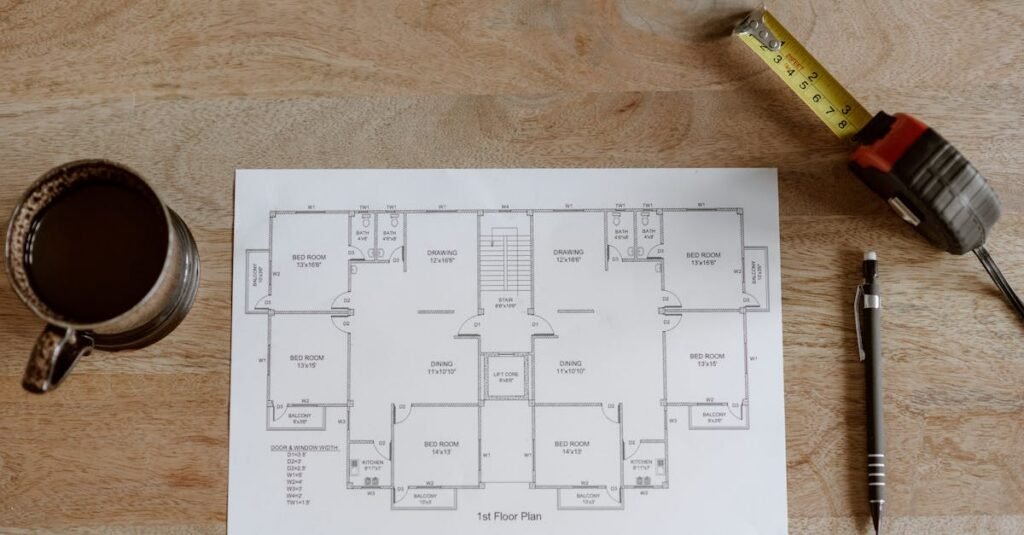
Price per square foot has become the go-to metric for UK buyers checking whether they are overpaying. It is simple, fast, and feels objective. It is also misleading without context.
The metric measures one thing: take the price, divide by the floor area. A flat at £300,000 with 800 square feet gives you £375 per square foot. That compounding effect makes it handy for spotting outliers. But PSF cannot see the things that actually move property values — a short lease about to get expensive, a neighbourhood improving fast, or a building that needs £50,000 in work.
Same Building, Same Month, Very Different Story
£500/sqft
650 sq ft flat in Clapham SW4, needs £50k+ remedial work, 125-year lease
Land Registry, March 2026
£731/sqft
identical 650 sq ft flat in same building, fully renovated, 72-year lease
Land Registry, March 2026
How does price per square foot vary across the UK?
| Region | Typical PSF range (2026) | Context |
|---|---|---|
| London (prime central) | £800–£2,500 | Mayfair, Kensington, Chelsea |
| London (zones 2–3) | £200–£500 | Clapham, Islington, Stratford |
| South East | £150–£400 | Surrey, Kent, Sussex |
| Midlands | £100–£250 | Birmingham, Coventry, Worcester |
| North (cities) | £80–£200 | Manchester, Leeds, Newcastle |
| Regional towns | £60–£150 | Market towns and smaller cities |
| Cheapest areas | £118–£180 | Hartlepool, Great Yarmouth, Plymouth |
The most expensive area outside London is Elmbridge, Surrey, at over £1,000 per square foot. The cheapest is Hartlepool at £118. That is a 10x difference, and both are perfectly functional property markets. Within London alone, ranges shift 10% year-on-year in gentrifying areas. In stable market towns, PSF barely moves at all.
Why can the same postcode have a 30% spread in price per square foot?
A postcode is not a guarantee of sameness. One postcode district can span Victorian mansion blocks, new-build flats, and warehouse conversions all on the same street. Within that micro-geography, PSF varies 10–30% for properties that look similar on paper. Here is what drives the differences.
Lease length. A flat on an 80-year lease is worth roughly 20% less than an identical flat on a 125-year lease. Below 80 years, the gap widens fast. At 70 years it can be 30% cheaper. Below 40, nearly impossible to mortgage. PSF ignores lease length entirely.
Condition. Properties in poor condition sell for 15–20% less per square foot than comparable ones in good shape. A property needing rewiring, a new boiler, damp treatment, and full renovation will have a much lower PSF than one that had all of that done in the last five years.
Layout. A long, narrow 700 sq ft flat can feel cramped and sell at £280/sqft. A well-proportioned 650 sq ft flat with good ceiling height and natural light sells at £350/sqft. None of that shows up in the numbers.
Outdoor space. Research from Savills found buyers pay 39% more for homes with larger gardens. In prime central London, a substantial garden commands a 34% premium. PSF measures internal area — it misses this entirely.
Tenure. Freehold commands a premium over leasehold because you own the structure and land outright. Leaseholders face ground rent, service charges, and extension costs that eat into value.
What does a real-world example look like when PSF is misleading?
Two 2-bed conversion flats, both 650 sq ft, in a Victorian mansion block in Clapham (SW4). Both sold in March 2026.
| Factor | Flat A (£325,000) | Flat B (£475,000) |
|---|---|---|
| PSF | £500/sqft | £731/sqft |
| Lease remaining | 125 years | 72 years |
| Condition | Original windows, 1998 kitchen, suspect plumbing | Fully renovated 2023, new kitchen, rewired |
| Outdoor space | None | Small terrace (80 sqft) |
| Floor | Second floor | Ground floor (damp risk) |
Flat B is 31% more expensive on PSF. But Flat A needs £50,000–£80,000 in work to match Flat B’s condition, while Flat B faces a £15,000–£25,000 lease extension cost that Flat A will not see for decades. Looking at PSF alone tells you almost nothing useful here.
How should you actually use price per square foot when buying?
Step 1: Use it as a postcode sanity check. Within a postcode, PSF varies 10–20% for genuinely similar properties. If you find a 2-bed at £300/sqft when the local average is £400/sqft, ask why. Short lease? Poor condition? Noisy road? A significantly lower PSF usually signals a hidden cost.
Step 2: Check recent sold prices, not asking prices. Asking prices are aspirational. Use Land Registry sold data from the last 3–6 months. Median PSF from recent sales is better than the mean — it avoids distortion from penthouses pulling the average up or distressed sales dragging it down.
Step 3: Adjust for lease, condition, and the big factors. A property with a 75-year lease is worth 15–25% less than an equivalent with 125 years, regardless of PSF. Condition can add or subtract 20%. Garden and outdoor space adds 10–39%. Good orientation and natural light justifies a 5–10% premium. Use PSF as a filter, not the answer.
⚠️ FLOOR AREA DATA IS OFTEN WRONG
Nearly two-thirds of properties examined had overstated their size — with average mismeasurements of 32 sq ft for flats and 92 sq ft for houses. In London, that translates to over £33,000 in price distortion. Always verify floor area from EPC data, not agent estimates. Some tools include garages, some do not. Some count balconies, others do not. The underlying data is inconsistent, which means your PSF comparison is only as good as the floor area numbers behind it.
Frequently asked questions
Does PSF work differently for London flats versus regional houses?
Yes. London flats are often leasehold, so lease length drives massive PSF variation. Regional houses are more commonly freehold, so condition and renovation cycle matter more. Always check tenure and lease length before comparing PSF across different markets.
How much can floor area estimates vary?
Significantly. Nearly two-thirds of properties examined had overstated their size, with average mismeasurements of 32 sq ft for flats and 92 sq ft for houses. In London, that distortion adds up to over £33,000. Always use EPC data rather than agent estimates.
How often does PSF change in my area?
In London and the South East, 5–10% shifts per year are normal. In regional towns and villages, 2–3% annual movement is typical. During rate spikes or downturns, PSF can fall 10–15% in a single year. Check quarterly benchmarks if you are buying in a volatile market.
Can I use PSF to spot investment opportunities?
It can flag areas where prices per square foot are lower than neighbouring postcodes — suggesting either growth potential or a problem you have not found yet. But good investment depends on future demand (transport links, regeneration, school openings), not just current PSF. Use it as a starting point, then dig deeper.
What if the property is unusual — a loft, a conversion, or a listed building?
PSF becomes less reliable for unusual properties. A converted warehouse with 15-foot ceilings and raw brick is not comparable to a standard flat. A listed building has renovation restrictions that affect its effective value per square foot. For anything unusual, focus on comparables with similar construction and history, not just size.
PSF is a speedometer, not a dashboard
Scan any property for condition issues in seconds with homeSurvey. Free to download.


Know exactly what you're buying
Walk any property with the free homeSurvey app and get an AI condition report for £24.99 — before you spend hundreds on a traditional survey.