
Homeowners
Planning Permission vs Permitted Development: What You Can Build Without Asking
⚡ QUICK ANSWER
Permitted development is a set of pre-approved building rights from the government that lets UK homeowners build certain things without a planning application. Most single-storey rear extensions (up to 4 metres for detached, 3 metres for others), standard loft conversions, and garden sheds qualify. But you still need Building Control approval — permitted development is not a free pass. The real trap: Conservation Areas, listed buildings, and flats face tight restrictions. Get the dimensions wrong by even one metre and you need a full planning application at £548 instead of a potential £249 for prior approval.
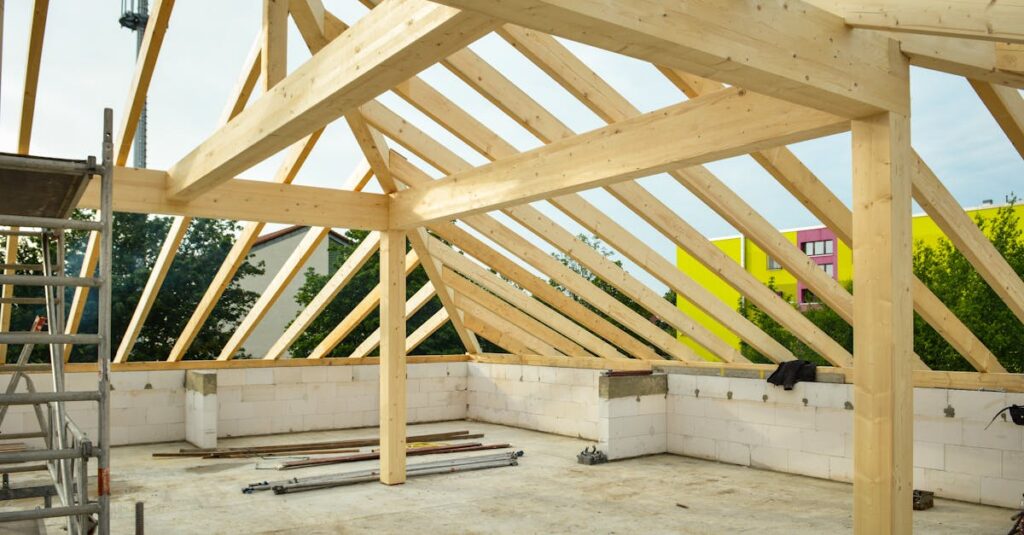
The rules that confuse most UK homeowners come down to two separate things that sound the same but are not. Permitted development rights (PDRs) let you build certain things without asking the local planning authority. Building regulations make sure whatever you build is structurally sound and safe. You can have permitted development but still need building control sign-off.
The second layer of confusion: location-based restrictions that override almost everything. Live in a Conservation Area or beside a listed building, and your permitted development rights shrink dramatically. This is the invisible deal-breaker that catches renovation plans and costs homeowners thousands.
Planning Enforcement — The Reality
10,016
planning enforcement actions taken in 2025 — up 25% from 7,591 in 2022
Planning Enforcement Data, 2025
269k+
enforcement actions recorded over the past 25 years across England
Cumulative enforcement records
What can you build under permitted development without planning permission?
Permitted development rights come from the General Permitted Development Order (GPDO). They tell you what you can build without submitting a planning application. Think of it as a list of pre-authorised building work. No council involvement needed — as long as you stay within the limits.
The catch: permitted development does not override all regulation. You still need building regulations approval for most work. You must also comply with covenants on your property deed and lease conditions if you rent. And if you live in a Conservation Area, National Park, Area of Outstanding Natural Beauty, or a listed building — the rules are much tighter.
How far can you extend at the rear without planning permission?
Rear extensions are the biggest source of confusion. Most can be built as permitted development if they do not exceed the depth or height limits, which differ by property type.
| Property Type | Max Depth (Standard PD) | Max Depth (Prior Approval) | Max Eaves Height | Height if <2m from Boundary |
|---|---|---|---|---|
| Detached | 4 metres | 8 metres | 4 metres | 3 metres |
| Semi-detached | 3 metres | 6 metres | 4 metres | 3 metres |
| Terraced | 3 metres | 6 metres | 4 metres | 3 metres |
For larger extensions through the Prior Approval scheme (Larger Home Extension scheme), detached houses can extend up to 8 metres, others up to 6 metres. Prior Approval is a notification process, not a formal planning application. You tell the council and they have 42 days to raise concerns about contamination, flooding, highway safety, and impact on neighbours. They cannot reject you on design or visual appearance. If they do not respond in 42 days, you can proceed.
This process costs £249 from April 2026 and takes 6–8 weeks. Compare that to a full planning application at £548. Prior approval is almost never refused unless there is a genuine risk.
⚠️ THE HEIGHT TRAP
If your original house has a pitched roof that rises above 4 metres, your extension cannot exceed that height or match the highest part of your original roof. Measure carefully from the original roof peak, not the gutters. Surveyors find this mistake constantly — it forces a planning application that could have been avoided.
What are the rules for loft conversions under permitted development?
Loft conversions are some of the easiest permitted development projects if you meet the size limits. A simple attic room with dormer windows is typically fine. But get the volume wrong and you will need planning permission instead.
| Property Type | Max Volume | Dormer Windows? | Side Windows | Height Restriction |
|---|---|---|---|---|
| Terraced | 40 cubic metres | Yes | Obscure-glazed, opens >1.7m | Cannot exceed original roof height |
| Semi-detached | 50 cubic metres | Yes | Obscure-glazed, opens >1.7m | Cannot exceed original roof height |
| Detached | 50 cubic metres | Yes | Obscure-glazed, opens >1.7m | Cannot exceed original roof height |
| Flat/Maisonette | Not permitted | N/A | N/A | N/A |
Volume equals length times width times height. A typical 3-metre by 6-metre attic room with a 2.5-metre ceiling is about 45 cubic metres — that exceeds the terraced house limit. You would need to apply for planning permission or choose a smaller design. And if a previous owner already added a dormer or other roof extension, that volume counts towards your limit. You cannot stack permitted developments.
✅ GET A LAWFUL DEVELOPMENT CERTIFICATE
If you are uncertain whether your design falls within permitted development, apply for a Lawful Development Certificate (LDC) before construction. From April 2026, it costs £309 for existing work or up to £274 for proposed work. It takes 8–12 weeks. If approved, you have formal proof the work is lawful — which protects your property value and future sale. Worth the investment if there is any doubt.
What are the rules for garden buildings and outbuildings?
Sheds, studios, greenhouses, and garden rooms are usually permitted development — with strict rules about placement, height, and total coverage. The half-garden rule is the one that catches most people.
| Requirement | Rule |
|---|---|
| Height (eaves) | Maximum 2.5 metres |
| Height (overall, pitched roof) | Maximum 4 metres |
| Height (within 2m of boundary) | Maximum 2.5 metres overall |
| Garden coverage | Not more than 50% of the original garden area |
| Placement | Cannot be in front of the main elevation |
| National Parks / AONBs | Max 10 sq m if more than 20m from house |
WORKED EXAMPLE
Garden Home Office — Does It Fit?
80 sq m
Garden size
What happens to permitted development in Conservation Areas?
Permitted development rights shrink dramatically in Conservation Areas and disappear almost entirely for listed buildings. This is the invisible deal-breaker that catches many renovation plans.
Over 10,000 Conservation Areas exist in England. Many homeowners do not realise they live in one until they start planning work. You can live on a street with no listed buildings but still be in a Conservation Area. Even modest rear extensions, dormer windows, and garden sheds may require planning permission.
| Scenario | Rear Extension | Loft Conversion | Garden Building | Typical Extra Cost |
|---|---|---|---|---|
| Standard residential | Up to 4m (permitted) | Permitted (volume limits) | Up to half garden | Inspection only |
| Conservation Area | Planning needed | Planning needed | Severely restricted | £500–£1,500 |
| Listed building | Consent required | Consent required | Consent required | £800–£2,500 |
| Grade II listed in CA | Double control | Consent required | Rarely allowed | £1,000+ |
⚠️ THE CONSERVATION AREA TRAP
Local authorities can impose Article 4 Directions in Conservation Areas, removing specific permitted development rights. These typically restrict replacement of windows and doors, erection of fences and gates, cladding and rendering, roof alterations, and garden structures. Always check your property’s Conservation Area status on your local planning authority website before spending money on architects. Building without consent can result in enforcement action and demands to reverse the work at your expense.
Why do you still need building regulations even with permitted development?
Many homeowners assume permitted development means the work is automatically approved. It does not. Permitted development is about planning control. Building regulations are about safety and structural compliance. They are separate systems.
You still need Building Control sign-off for most extensions and loft conversions. They inspect the work at various stages: foundations, roof structure, insulation, final finish. The inspection fee is usually £200–£400 depending on scope.
Skip Building Control approval and you face problems when you sell: buyers’ lenders will ask for proof, and you may not be able to provide it. This is the cost most homeowners forget until it is too late.
✅ YOUR DECISION TREE
Step 1: Check your Conservation Area status online (5 mins, free)
Step 2: Measure your proposed work against the size limits in this guide
Step 3: Call your local planning authority if unsure (10 mins, free)
Step 4: If confident — notify Building Control and proceed
Step 5: If uncertain — apply for a Lawful Development Certificate (£309, 8–12 weeks)
Step 6: Never start work without Building Control approval in place
Frequently asked questions
Can I build a rear extension without planning permission?
Probably, if it is single-storey and does not exceed 3–4 metres in depth depending on your property type. You do not need planning permission, but you do need Building Control approval. And if you live in a Conservation Area, you need planning permission regardless. Always check your location first before spending money on designs.
What is Prior Approval and how does it differ from planning permission?
A streamlined process for certain developments like larger rear extensions. You notify the council instead of applying for permission. They have 42 days to raise concerns about contamination, flooding, highways, or neighbour impact. They cannot refuse on design alone. From April 2026, the cost is £249 and it takes 6–8 weeks. Compare this to a full planning application at £548.
Do flats have permitted development rights?
Very limited. Flats cannot use standard loft conversion rights. Any extension beyond walls or communal areas typically requires planning permission. Always check with your freeholder or managing agent before planning work. Most flats have restrictive leases that eliminate permitted development rights anyway.
Do I still need building regulations if it is permitted development?
Almost always yes. Permitted development is a planning matter. Building regulations are a safety matter. They are separate. Most extensions, conversions, and garden rooms need both planning clearance and Building Control sign-off. Do not skip this step.
What happens if I build something without permission?
Enforcement action. Over 269,000 enforcement actions have been taken over the past 25 years. In 2025 alone, 10,016 enforcement notices were issued. If you build without consent, the council can issue an enforcement notice requiring you to reverse the work at your expense. This is not a fine — this is demolition. You are also stuck with a property that is much harder to sell.
Check a property before you commit to building work
Scan any property for visible extensions, structural changes, and condition issues in seconds with homeSurvey. Free to download.


Know exactly what you're buying
Walk any property with the free homeSurvey app and get an AI condition report for £24.99 — before you spend hundreds on a traditional survey.