
Buyers
Leasehold vs Freehold in 2026: Everything the Estate Agent Won’t Explain
⚡ QUICK ANSWER
A leasehold property is one where you own the right to live in it for a fixed number of years (typically 99 to 999), but somebody else owns the land underneath. A freehold property is one where you own the building and the land outright, forever. Most UK flats are leasehold. Most houses are freehold. The difference in running costs is staggering: service charges average £2,405 per year (climbing 4.6% annually), ground rent piles on hundreds more, and over 25 years the extras can top £100,000. Reform is coming with the Leasehold and Freehold Reform Act 2024 — but implementation does not start until late 2026 at the earliest.
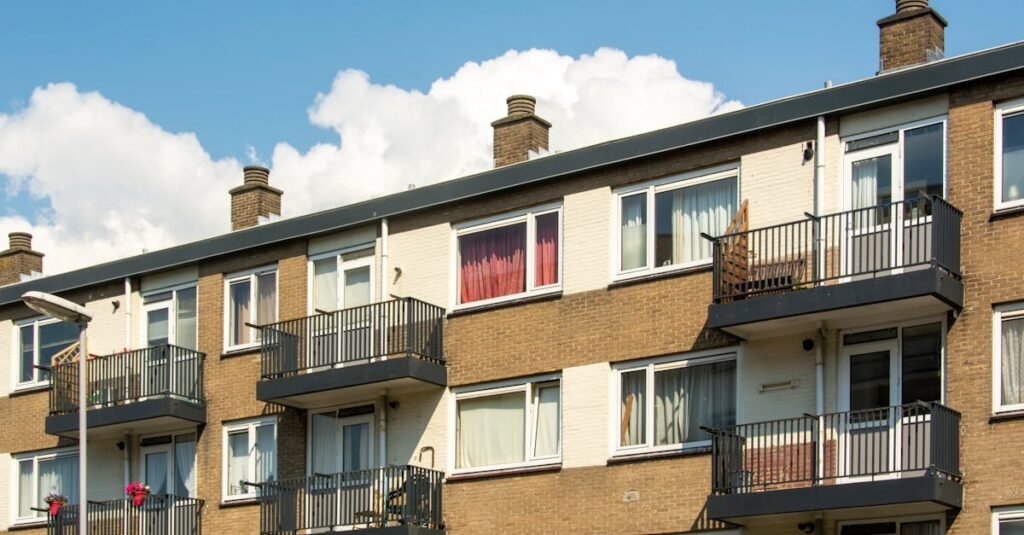
Most buyers treat leasehold as a box to tick: you are buying a flat, it costs money, move on. Estate agents skip past it. Conveyancers bury the detail in 40 pages of legal paperwork. But leasehold ownership has financial consequences that dwarf almost anything else in the purchase.
You will pay hundreds of pounds a month in charges that freehold owners never see. Over a 25-year mortgage term, those charges easily reach £70,000 to £100,000 on top of your mortgage payments. And the structure of leasehold can trap you: once a lease drops below 80 years, the property loses value fast, becomes nearly impossible to mortgage, and extending the lease gets dramatically more expensive.
The True Cost of Leasehold — Over 25 Years
£2,405
average annual service charge in 2025, rising 4.6% year-on-year
HomeOwners Alliance, 2025
£70k–£100k
in extra costs over 25 years on top of your mortgage — service charges, ground rent, and lease extensions
Calculated from current average charges
What is leasehold and why is nearly every flat sold this way?
In England and Wales, property comes in three flavours: leasehold, freehold, and commonhold (the new kid, not yet widespread). The differences matter far more than most buyers realise.
| Tenure | Who owns the land? | Your ownership | Service charges | Ground rent |
|---|---|---|---|---|
| Leasehold | Freeholder | Right to occupy for fixed term (99–999 years) | Yes, mandatory | Yes, typically £200–£2,000+/yr |
| Freehold | You | Outright, indefinite | No (your choice) | No |
| Commonhold | All residents collectively | Outright via corporate vehicle | Yes (member-funded) | No |
The practical reason flats are leasehold: managing a multi-unit building (the roof, boilers, structure, insurance) needs coordinated decisions. If every flat owner had freehold, you would need unanimous consent on every major repair. That does not work. Leasehold lets a single freeholder control the building and charge occupants for upkeep.
The freeholder owns the land and the structure itself. You pay them ground rent annually, plus service charges covering roof repairs, communal heating, building insurance, cleaning, and management fees. In extreme cases, the freeholder can enforce lease breaches — including forfeiture, which is the removal of your ownership entirely.
How much does ground rent actually cost — and why does it keep rising?
Ground rent is an annual fee you pay the freeholder simply for occupying the property. It sits on top of service charges. While historically it was a peppercorn (literally pennies), it has ballooned over recent decades. The way escalation clauses work has created a serious affordability problem.
| Structure | Example | Why it matters | Current law |
|---|---|---|---|
| Fixed | £200–£500/yr, never changes | Predictable but still adds to monthly outgoings | Legal if in original lease |
| Escalating (doubling) | £500/yr, doubling every 10 years | Unaffordable by year 30 — a major scandal pre-2022 | Banned for new leases since 30 June 2022 |
| RPI-linked | Rises with inflation, e.g. £300 + 2% annually | More predictable than doubling but erodes value over time | Legal for new leases |
⚠️ THE ESCALATING GROUND RENT SCANDAL
Buyers before 2022 were often locked into doubling ground rent. A flat bought for £300,000 might carry £500/year rising to £1,000 after ten years, then £2,000, then £4,000. By year 40, ground rent alone consumed thousands annually. The Leasehold Reform (Ground Rent) Act 2022 banned this for new leases — but existing leases are stuck with whatever was agreed at purchase.
What is the Leasehold and Freehold Reform Act 2024 actually changing?
The Act received Royal Assent on 24 May 2024. A draft Commonhold and Leasehold Reform Bill followed on 27 January 2026 with deeper reforms. Some changes are already live. Most of the big ones are not.
✅ CHANGES ALREADY IN FORCE (SINCE JANUARY 2025)
No more two-year wait for lease extensions. You can now request an extension the day you buy. Each side pays their own legal costs — previously you paid the freeholder’s too. Expanded Right to Manage (effective 3 March 2025): more leaseholders qualify to take over building management, and you no longer cover the freeholder’s legal costs in RTM claims.
| Reform | Current regime | Proposed change | Expected timeline |
|---|---|---|---|
| Ground rent cap | Varies (some £2,000+/yr escalating) | £250/yr max, dropping to peppercorn after 40 years | Late 2027/early 2028 |
| Marriage value | Payable if lease below 80 years — costs thousands | Abolished for all leases | Expected late 2027 |
| Lease extension term | 90 years added | 990 years added (near-perpetual) | Expected late 2027 |
| New flats | Sold as leasehold | Commonhold mandatory — no new leasehold flats | Expected late 2027 onwards |
| Service charge transparency | Freeholder sets; limited challenge rights | Prescribed format, stronger tribunal challenge rights | Regulations late 2025/early 2026 |
The critical point for anyone buying in 2026: major reforms are not expected until late 2027. You are buying under the current regime.
How much do service charges really cost — and why do they keep climbing?
Service charges cover everything the freeholder does to maintain the building: repairs, insurance, communal heating, cleaning, and management fees. You cannot opt out. They are mandatory. And they rise well ahead of wages.
Service Charges by Property Size — 2025
£2,007
one-bedroom flat average annual service charge
HomeOwners Alliance, 2025
£2,351
two-bedroom flat average annual service charge
HomeOwners Alliance, 2025
£2,977
three-bedroom flat average annual service charge
HomeOwners Alliance, 2025
Plenty of leaseholders get caught out when charges jump 5–10% in a single year — usually because of a major repair (boiler failure, roof leak) or a change in managing agent. You cannot predict exact figures, but requesting three years of service charge accounts from the seller gives you a reasonable picture of the trend.
Why does a lease below 80 years cost you tens of thousands extra?
Below 80 years remaining, three things go wrong at once: the property becomes nearly unmortgageable, it loses value sharply, and extending the lease suddenly costs far more because of something called marriage value.
Most lenders refuse to lend on leases under 70 years. HSBC requires 85 years minimum at the point of mortgage completion. Many insist the lease extends at least 30–40 years beyond the mortgage end date. Below 50 years, mortgages become almost impossible to get.
The 80-Year Lease Trap
How Lease Length Affects Extension Cost
London flat worth £200,000 · typical lease extension costs 2026
⚠️ SERVE NOTICE BEFORE 80 YEARS — THIS IS CRITICAL
You can freeze your lease at its current length by serving a Section 42 Notice (a formal lease extension request) before it drops below 80 years. This locks in the lower cost and prevents marriage value from kicking in. Many buyers miss this window completely and face bills thousands of pounds higher as a result. Once marriage value applies, it does not disappear if the lease later recovers above 80 years.
How much does it cost to buy the freehold outright?
Since 31 January 2025, you can request to buy the freehold (enfranchisement) from day one — the two-year waiting period was scrapped. You pay your own legal costs and the freeholder pays theirs (previously you covered both). That makes it more accessible. The freeholder’s asking price can still be steep.
| Cost component | Typical range | Notes |
|---|---|---|
| Premium to freeholder | £8,000–£30,000+ | Varies by property value, lease length, and location |
| Your solicitor fees | £1,500–£2,500 | Legal work for the enfranchisement claim |
| Surveyor valuation | £1,000–£2,000 | Independent valuation for freeholder negotiation |
| Freeholder’s legal costs | Freeholder pays | No longer your burden since January 2025 |
| Total | £10,500–£34,500+ | Most cost-effective when lease is 80+ years |
Enfranchisement makes most financial sense when (a) your lease is above 80 years so marriage value does not apply, (b) the property value is high enough that the freeholder’s share is proportionally small, or (c) you plan to own long-term and want rid of ground rent and unpredictable service charges for good.
💡 REFORM COULD CUT ENFRANCHISEMENT COSTS
Once marriage value is abolished (expected late 2027), buying the freehold on a short-lease property becomes dramatically cheaper. If your lease is below 80 years, you may want to do the maths on waiting vs. paying the premium now. Talk to a solicitor — timing matters.
What is commonhold and why are new flats switching to it?
Commonhold means freehold ownership of a flat combined with mandatory membership in a commonhold association that manages the building together. No external freeholder. No ground rent. No expiring lease. You own your flat outright, forever.
| Feature | Leasehold | Commonhold |
|---|---|---|
| Land ownership | External freeholder | All residents collectively |
| Your stake | Right to occupy for fixed term | Outright freehold ownership |
| Ground rent | £200–£2,000+/yr | None |
| Management | Freeholder decides; you pay | Democratic via association |
| Expiring lease risk | Yes — unmortgageable below 80 years | No expiry, ever |
| Cost to extend tenure | £3,000–£15,000+ every 90 years | Zero |
From 2027 onwards (expected), new-build flats cannot be sold as leasehold. Commonhold becomes the default. That said, existing leasehold flats stay leasehold indefinitely — the change only applies going forward.
Commonhold has existed in law since 2004 but remains rare (fewer than 10,000 units in England and Wales). Freeholders lobbied against it because they lose income. Lenders were cautious. Managing agents found the governance unfamiliar. Making it mandatory for new flats forces the entire industry to adapt.
What does leasehold ownership actually cost each month?
Purchase price: £280,000 · 99-year lease · 10% deposit
Monthly mortgage (90% LTV, 25 years at 4.5%): £1,100
Monthly service charge: £196 (£2,351/yr average)
Monthly ground rent: £42 (fixed £500/yr)
Monthly total: £1,338
Over 25 years:
Mortgage repayment: £330,000 (principal + interest)
Service charges (at 4% annual growth): ~£83,000
Ground rent (fixed): £12,500
Lease extension (if needed): £8,000–£15,000
Total cost of ownership: ~£433,500–£440,500
Service charges alone approach half the mortgage payment. Many buyers are genuinely shocked when they sit down and add it up. The lease extension cost is conditional — you may not need one within 25 years — but the service charge and ground rent are bills you cannot avoid.
Could you face unexpected remediation costs on top of everything else?
The Building Safety Act 2022 introduced rules for fixing building defects — particularly fire safety and cladding issues. For buildings 7+ storeys with 7+ dwellings, cladding remediation costs were initially loaded onto freeholders. However, the 2024 Reform Act now lets freeholders pass non-cladding remediation costs to leaseholders through service charges (up to certain caps).
⚠️ REMEDIATION COST PASS-THROUGH
Freeholders can now recover the cost of fixing defects (fire systems, sprinklers, structural repairs) from leaseholders via service charges. These are capped, but you could still face bills of £5,000 to £20,000+ for buildings with serious defects. These sit on top of your normal service charges — completely unexpected and extremely difficult to budget for.
Frequently asked questions
Can I buy a freehold flat?
Technically yes, but it is very rare. Most UK flats are leasehold. New flats from 2027 will be commonhold, not freehold. If you want to own land outright without any ground rent or service charge obligation, buy a house or bungalow.
How do I predict future service charges?
You cannot predict exactly, but request the last three years of accounts from the seller’s solicitor. If charges have been climbing 5–10% annually, expect that to continue. Older buildings, those needing major works, or buildings with expensive managing agents tend to rise faster. Budget for at least 4–5% growth each year.
What should I do if my lease is dropping below 80 years?
Act immediately. Serve a Section 42 Notice before the lease drops below 80 years — this freezes the length for valuation purposes and locks in lower extension costs. Once you cross the 80-year line, marriage value kicks in and the bill jumps by thousands. Talk to a solicitor; the window matters.
Is a short-lease property worth buying in 2026?
Only if the price is discounted enough to absorb the extension cost. A 70-year lease should trade at 15–25% below a 100-year lease. Run the numbers: if you save £50,000 on purchase but spend £10,000–£15,000 extending within a decade, the discount is worthwhile. If prices are similar, steer clear. Marriage value reform is coming (late 2027), but 2026 buyers are stuck with the current rules.
Should I wait for leasehold reform before buying?
If you are looking at short-lease properties (below 80 years), waiting until late 2027 for marriage value abolition could save serious money. If you are buying a long-lease flat (99+ years), the reforms do not materially change your position — ground rent caps and commonhold apply to new-builds, not existing stock. If you need to move now, buy under the current regime and plan your extension timing accordingly.
Can I refuse to pay service charges?
No. Non-payment can trigger forfeiture — the loss of your lease entirely. Since October 2024 you have stronger rights to challenge unfair charges and demand transparency. If a charge looks unreasonable, request supporting accounts from the managing agent and raise a formal dispute. If that goes nowhere, you can appeal to the First-tier Tribunal. But you must keep paying while the dispute runs.
Know what you’re buying before you commit
Scan any property for visible issues in seconds with homeSurvey. Free to download.


Know exactly what you're buying
Walk any property with the free homeSurvey app and get an AI condition report for £24.99 — before you spend hundreds on a traditional survey.