
Renters
How to Document the Condition of a Rental Property Before You Move In
⚡ QUICK ANSWER
A move-in condition report is a dated, photographic record of every room, fixture, and defect in a rental property taken on the day you collect the keys. One in four UK tenants fail to retrieve their full deposit after moving out. The difference between winning and losing a dispute almost always comes down to whether you documented the property on day one and got written agreement from the landlord. Three steps protect your deposit: (1) Take timestamped photographs of every room, fixture, and visible defect. (2) Write a detailed room-by-room inventory describing condition. (3) Get the landlord or agent to sign off before you sign the tenancy.
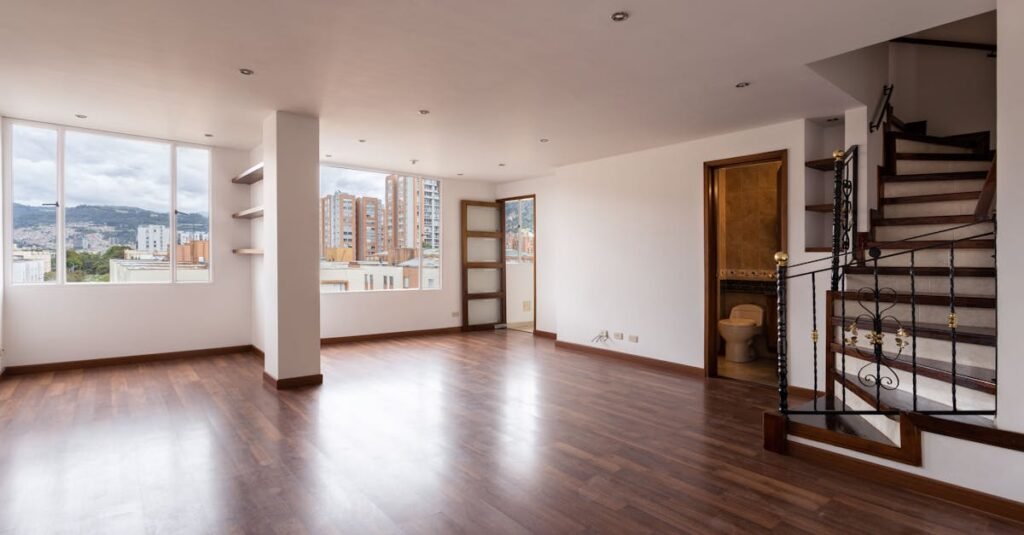
The deposit protection schemes that hold UK rental deposits resolve disputes in only 1% of tenancies. But if you are in that 1%, the outcome depends almost entirely on evidence. When disputes happen, they centre on condition: the landlord claims you caused damage that was already there, or that the property was cleaner when you left than when you moved in.
Landlords have the advantage in this argument. They own the property and set the terms. Your only real protection is evidence: photographs with timestamps, a written inventory signed by both parties, and records of the property condition on day one.
Deposit Disputes — The Reality
25%
of UK tenants do not retrieve their full deposit after moving out
Generation Rent, 2025
63%
of renters lose money specifically to cleaning-related deductions
TDS Dispute Data, 2025
Why does move-in documentation matter so much?
When a deposit dispute goes to adjudication, the adjudicator decides who has better evidence. If you have photographs from move-in day and a signed inventory, and the landlord has neither, the burden of proof shifts. Tenants win around 22.8% of disputed cases outright. Landlords win around 19.2%. But these figures hide something worth knowing: tenants with good documentation win far more often.
This is not about legal technicalities. It is about making the adjudicator’s job straightforward. If you can show the walls were marked on move-in and marked in the same way on move-out, the landlord cannot claim you caused the damage.
Average Deposit Deductions
£250
average deposit deduction across all UK tenancies
TDS Dispute Data, 2025
16%
of tenants lost over £750 from their deposit
Generation Rent Survey, 2025
How should you photograph a rental property on move-in day?
Photographs are the strongest evidence because they are hard to argue with. A mark on a wall on day one is a mark on day one. But photographs only count if they are clearly from move-in day. This requires discipline and a systematic approach.
Timestamp every photo. Most smartphones stamp the date and time automatically. Check your phone settings to confirm this is turned on. You can also take a photo of today’s newspaper or your phone screen showing the date as backup evidence.
Photograph every room from multiple angles, including hallways, cupboards, storage spaces, and any enclosed areas. Do not skip small spaces where damage often gets hidden.
Capture close-ups of damage or wear. If the carpet is worn in a corner, photograph that corner both close-up and from a distance showing its location within the room. If there is a crack in the wall, get a close-up and a wider shot showing the context.
Photograph all appliances that come with the property: the oven (inside and outside), fridge, washing machine, dishwasher, boiler. Check that they work and test key functions. Note their condition in your photos.
Photograph any existing damp, mould, or discolouration. Under Awaab’s Law (effective October 2025), landlords must fix these issues within strict timeframes. They cannot later claim you caused the problem if you have day-one evidence.
✅ ORGANISE YOUR PHOTOGRAPHIC EVIDENCE
Create a folder on your phone called “Move-in-[date]” and move all photos there immediately. Cloud storage (Google Photos, OneDrive, iCloud) automatically backs them up and preserves timestamps. When you move out, create a matching “Move-out-[date]” folder. You now have a time-locked record that is hard to dispute.
What should a room-by-room inventory include?
A written inventory serves two purposes. First, it forces you to look closely at condition — you notice things in writing that you might miss in photos. Second, it creates a document you can reference when disputes happen.
| Element | What to describe |
|---|---|
| Walls and ceilings | Marks, scuffs, discolouration, cracks, damp patches, peeling paint, water stains |
| Floors and carpets | Worn areas (and location), stains, tears, type of flooring, unevenness or damage |
| Doors and windows | Cracks, stiffness, missing handles, broken locks, condensation, frame condition |
| Appliances | Oven interior/exterior, fridge seals, washing machine drum, dishwasher seals, boiler condition |
| Bathrooms | Tiles, grout, shower head, taps, mirrors, ventilation, mould or damp spots, sealant condition |
| Kitchen | Worktops, units, sink, taps, flooring, wall condition, existing stains or damage |
| Fixtures supplied | Light fittings, radiators, curtain rails, shelving — condition and functionality |
Walls: Emulsion, off-white, scuff marks near light switch (see photo 14), no cracks or damp
Carpet: Beige, worn patch under window (see photo 15), small stain near door (see photo 16), general wear consistent with age
Ceiling: Smooth plaster, no visible cracks, slight yellowing near window (see photo 17)
Light fitting: Ceiling rose present, bulb working, fitting secure
Windows: Double-glazed, both opening smoothly, frames clean, small hairline crack in bottom-left pane (see photo 18)
Door: Wooden, painted white, handle stiff to turn, no lock present
⚠️ DO NOT EXAGGERATE OR INVENT PROBLEMS
Landlords and their agents read inventories closely. If you claim damage that does not exist, or mark condition as worse than it is, you lose credibility. If the case goes to adjudication, an inspector may visit and will see your claims are false. Be honest and precise. Note what is genuinely wrong, but do not overclaim.
How do you get the landlord to agree to the inventory?
This is the critical step that most tenants skip. You have photographs and an inventory. Now you need the landlord or letting agent to sign off on the inventory before you move in. This proves that on day one, the property was in the condition you describe.
Send the inventory to the landlord or agent at least three days before your move-in date. Use email so you have a timestamp. Include a professional tone: “I would like to confirm the property condition at the start of the tenancy. Please review the attached inventory and photographs.”
Request written confirmation that they agree with the inventory. Email is fine, but ask them to reply explicitly with language like “I confirm I agree with this inventory” or “Agreed.” Do not accept vague responses.
If the landlord refuses to sign, send your inventory by email and save the timestamp. A record that you sent it is better than no record at all. Have a witness (a friend or family member) present with you on move-in day. They can attest to the property condition if needed later.
💡 PROFESSIONAL INVENTORY SERVICES
If you expect the landlord to be difficult, or if the property is high-value, hire a professional inventory company. These cost £75 to £200 depending on property size. An independent third-party inventory carries more weight in adjudication because it is assumed to have no bias.
Which items cause the most deposit disputes?
Carpets and flooring. Landlords often claim tenants have damaged carpets. But if the carpet was already worn or stained, you are not liable. Photograph worn patches, especially in high-traffic areas. Describe the carpet accurately as “worn”, “threadbare”, or note “age-related wear in high-traffic areas.” Landlords cannot charge for reasonable wear and tear under UK law.
Cleaning. This is the single biggest cause of deposit disputes, appearing in over 50% of all TDS dispute cases. If the property was not spotless when you moved in, document that. If you leave it in the same state, you are not liable for professional cleaning costs.
Damp, mould, or discolouration. If you see damp or mould on move-in day, photograph it in detail and note it in the inventory immediately. Then report the problem to the landlord in writing. This written report prevents the landlord from claiming later that you caused the damp.
Appliances and white goods. Test every appliance: oven, fridge, washing machine, dishwasher, boiler. Photograph them working, or note clearly if they are broken. If the oven does not work on day one, the landlord cannot charge you for a repair on move-out.
What should you do when you move out?
The evidence you gather on move-in is only half the battle. You need matching evidence on move-out to prove you did not cause damage during the tenancy.
Photograph every room in the same detail as your move-in visit. Use the same locations and angles if possible. Timestamp everything. Take photos of the property empty and clean, before the landlord does any inspection.
Send these move-out photos to the landlord or agent within 24 hours of leaving. Ask for written acknowledgement. Request a formal check-out inspection report. Compare move-out photos to move-in photos side by side. Any damage claimed by the landlord that is not visible in your photos is not your responsibility.
⚠️ PROTECT YOUR CLOUD BACKUP
Upload all photos to cloud storage (Google Photos, OneDrive, iCloud) immediately after taking them. These services auto-backup and preserve metadata including original date taken. Store copies in multiple locations. If you lose your phone or the landlord disputes your photos’ authenticity, cloud backups with metadata are very difficult to challenge in adjudication.
How does the deposit adjudication process actually work?
All UK deposits must be held in a government-backed scheme (TDS, DPS, or Capita). These schemes have adjudication services. If your landlord tries to keep money without agreement or reasonable justification, you can dispute it.
When you raise a dispute, the scheme gives the landlord a deadline to provide evidence supporting their deductions. If you have move-in photographs, an inventory, and written agreement, the burden shifts to the landlord to prove the damage is new.
Adjudication is normally completed within 28 days of receiving all evidence (TDS). DPS is faster, averaging 15-21 days. Cases with good documentation resolve faster and more fairly. Cases without evidence often result in 50/50 splits or losses.
✅ CHECK YOUR SCHEME DETAILS IMMEDIATELY
Within 30 days of moving in, your landlord must provide written details of which scheme holds your deposit, including the scheme name, address, and contact details. If they fail to do this, that is a breach of law and you can claim compensation. Keep this paperwork safe.
Frequently asked questions
Does the landlord have to sign an inventory?
No, there is no legal requirement. But most professional landlords and letting agents use inventories because they protect both parties. If your landlord refuses to sign one, send yours by email and keep the timestamp. A formal inventory from a professional service (£75 to £200) can be worth it if disputes seem likely.
What if I notice problems after moving in?
Report them to the landlord in writing immediately. Use email so you have a record. If the damage or problem exists after you have moved in, it is harder to prove it was pre-existing. The sooner you report it, the stronger your position.
Should I hire a professional inventory company?
It depends. If the property is high-value, has unusual features, or you expect difficulties with the landlord, a professional inventory (£75 to £200) is worth it. For a standard flat or house, your own inventory with photographs is usually sufficient if you are thorough and systematic.
Can I use video instead of photographs?
Video is helpful as additional evidence, but photographs are better for adjudication. Adjudicators need to see specific details clearly. A video walk-through is good supporting material, but still photograph the key problem areas separately with close-ups.
What is “normal wear and tear” and what can landlords charge for?
Normal wear and tear is reasonable deterioration from age and normal use: faded paint, worn carpet in high-traffic areas, loose handles. Landlords cannot charge for this. They can only deduct for damage caused by negligence or misuse: stains, burns, missing items, or structural damage. If your move-in inventory shows the wear was already there, you are protected.
Protect your deposit from day one
Document property condition with timestamped photos and structured reports using uSurv. Free to download.


Know exactly what you're buying
Walk any property with the free homeSurvey app and get an AI condition report for £24.99 — before you spend hundreds on a traditional survey.